

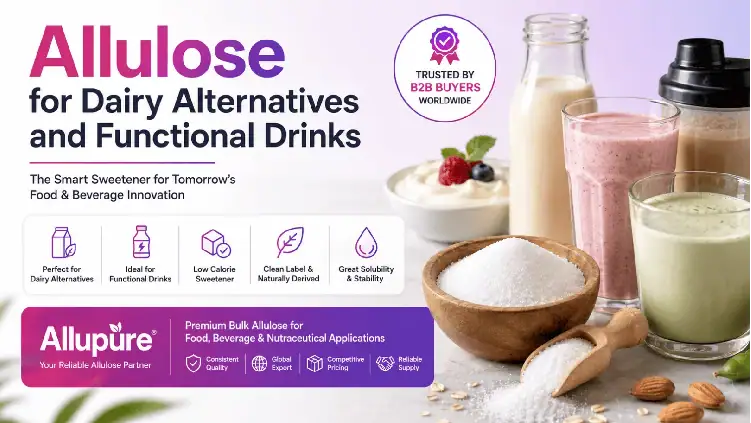
Allulose for Dairy Alternatives and Functional Drinks
Introduction: Why Allulose Is Reshaping B2B Ingredient Sourcing
The global food and beverage industry is going through a significant transformation. Consumers worldwide are demanding products that are lower in calories, free from added sugars, and made with clean-label ingredients – yet still enjoyable in taste and texture. For food manufacturers, beverage brands, and nutraceutical companies, this shift creates both a challenge and a clear commercial opportunity.
Allulose has emerged as one of the most commercially promising ingredients to address this demand. As a rare sugar found naturally in small quantities in foods like figs and raisins, allulose offers a taste and functional profile very close to sucrose – but with only a fraction of the caloric impact. For allulose for B2B buyers, this translates into a reliable, technically versatile, and market-ready ingredient that fits directly into the product categories growing fastest right now: dairy alternatives and functional drinks.
Allupure, based in India, has built its business around making high-quality allulose accessible to food and beverage companies around the world. As a dedicated allulose supplier in India, Allupure serves manufacturers, formulators, importers, and distributors across multiple industries – providing consistent quality, competitive bulk pricing, and a supply chain built for global B2B requirements.
This article walks through exactly why allulose matters for dairy alternatives and functional drinks, how it performs in real formulations, and why sourcing from a committed allulose ingredient supplier like Allupure gives your business a meaningful advantage.
Understanding Allulose: A Rare Sugar Built for Modern Formulation
Allulose is classified as a rare sugar – a monosaccharide that occurs naturally but in very small concentrations. Structurally, it is an epimer of fructose, meaning its molecular structure is almost identical to fructose with one key difference at the C-3 carbon position. That small structural variation is what makes allulose so remarkable for food and beverage formulation.
While the body absorbs allulose in the small intestine, it does not metabolize it in the same way as conventional sugars. It passes through the system largely unchanged, which is why it contributes minimal calories – typically around 0.2 to 0.4 kcal per gram, compared to 4 kcal per gram for sucrose. Regulatory authorities in several markets have recognized this and allow allulose to be listed or excluded from total and added sugar declarations in certain labeling frameworks.
Key Technical Properties of Allulose
For formulators and product developers, allulose delivers a range of functional benefits that few other low-calorie sweeteners can match:
- Sweetness: Approximately 70% of sucrose sweetness, with a clean flavor profile and no noticeable aftertaste
- Solubility: Highly soluble in water, making it easy to incorporate into liquid-based products
- Browning and Caramelization: Participates in Maillard reaction chemistry, which is essential for achieving realistic color and flavor in baked dairy alternatives
- Freezing Point Depression: Lowers the freezing point of liquid formulations, which improves texture in frozen dairy alternatives and ice cream substitutes
- Viscosity and Mouthfeel: Contributes body and mouthfeel in beverages and liquid systems without adding calories
- Synergy with Other Sweeteners: Works effectively in combination with stevia, monk fruit, erythritol, and sucralose to improve overall sweetness quality
These properties make allulose a highly attractive natural sugar alternative for categories where texture, taste parity with sugar, and clean labeling are all priorities simultaneously.
Allulose in Dairy Alternatives: Solving Formulation Challenges
The dairy alternative market has grown significantly over the past decade. Plant-based milks, creamers, yogurts, ice creams, and cheeses now occupy dedicated retail sections in markets around the world. However, manufacturers in this space consistently face a core formulation challenge: replicating the taste, texture, and sensory satisfaction of conventional dairy products – without animal ingredients and without excessive sugar.
Allulose addresses several of these challenges directly, which is why allulose for food manufacturers has become an increasingly important topic in product development conversations.
Plant-Based Milks and Creamers
Conventional dairy milk contains natural lactose, which contributes a mild sweetness and a characteristic body that plant-based alternatives often struggle to match. Oat milk, almond milk, soy milk, and coconut milk all have different flavor profiles and varying levels of inherent sweetness.
Allulose works exceptionally well in plant-based milks and creamers for several reasons. First, it contributes a clean sweetness without any of the cooling effect associated with polyols or the lingering bitterness sometimes associated with high-intensity sweeteners. Second, its viscosity-enhancing properties help improve the mouthfeel of thinner plant-based milk formulations, bringing them closer to the body of full-fat dairy. Third, as a clean-label sweetener, allulose fits the minimal-ingredient ethos that many plant-based consumers actively look for on product labels.
For coffee creamers specifically, allulose performs consistently well at high temperatures and integrates smoothly into hot beverages without separation or crystallization.
Dairy-Free Ice Cream and Frozen Desserts
Frozen dairy alternative formulations present one of the most technically demanding challenges in food science. The texture of ice cream – its creaminess, scoopability, resistance to ice crystal formation, and melt behavior – depends heavily on the interplay between sugars, fats, proteins, and freezing dynamics.
Allulose is particularly well-suited to this application because of its freezing point depression effect. Conventional sugars lower the freezing point of a mixture, which is part of what gives ice cream its soft texture at freezer temperatures. Allulose produces a similar effect, which means it can help dairy-free ice cream formulators achieve a scoopable, creamy texture even without dairy proteins and fats.
Additionally, allulose participates in Maillard browning at normal processing temperatures, which allows dairy-free ice cream brands to achieve realistic color development and flavor depth in products like caramel or chocolate variants – something that is difficult to achieve with many other sugar reduction ingredients.
Plant-Based Yogurt and Cultured Products
Dairy-free yogurts made from oat, coconut, cashew, or almond bases require sweetness that does not interfere with the starter cultures used in fermentation. Allulose is not fermented by most lactic acid bacteria, which means it passes through the fermentation process largely intact, remaining available as a sweetener in the finished product. This is a significant practical advantage for dairy alternative yogurt manufacturers who want consistent sweetness levels in their final product without adjusting formulations based on fermentation dynamics.
Allulose also blends well with the tangy, acidic flavor profile of yogurt, complementing rather than masking the characteristic taste that consumers associate with a quality cultured product.
Dairy-Free Cheese and Specialty Products
While sweetness plays a less dominant role in cheese applications, allulose can still contribute functionally in specialty dairy-free cheese products where Maillard browning and surface caramelization are desirable – such as in pizza-style shredded alternatives or spreadable cream cheese substitutes with flavored profiles.
Allulose in Functional Drinks: The Ingredient Advantage
Functional beverages represent one of the fastest-growing segments in the global food and beverage industry. From sports hydration drinks and protein shakes to nootropic waters, probiotic beverages, energy drinks, and wellness shots, consumers are looking for drinks that do more than simply quench thirst. They want beverages that support health goals – and they want those beverages to taste good without loading them with sugar.
For allulose for beverages, the opportunity is substantial. Beverage formulators need sweeteners that dissolve easily, provide consistent taste, remain stable across a range of pH values and temperatures, and support rather than interfere with functional ingredient systems. Allulose meets all of these requirements.
Sports and Hydration Drinks
Traditional sports drinks rely on sugar both for energy delivery and for palatability. However, many sports drink consumers today are either managing caloric intake or simply prefer lighter-tasting beverages that do not produce the sugary heaviness associated with high-glucose formulations.
Allulose can partially or fully replace sucrose and glucose in sports hydration products. Because it contributes body and sweetness without the caloric load, it allows brands to market their products as low-calorie or no-added-sugar while maintaining the mouthfeel and taste satisfaction that consumers expect from a sports drink. Its excellent solubility ensures that it mixes smoothly into liquid formulations without requiring high temperatures or extended mixing times.
Protein Shakes and Meal Replacement Beverages
Protein beverages present a unique formulation challenge because protein ingredients – whey, pea, soy, and rice proteins among them – often carry inherent bitterness or grassy off-notes that require masking through sweetness and flavoring. Traditional high-sugar formulations address this, but they create a caloric burden that contradicts the health positioning of most protein products.
Allulose is highly effective in protein beverage applications because it provides a full sweetness character that masks protein off-notes without adding significant calories. It also works synergistically with stevia and monk fruit extract, allowing formulators to reduce the amount of these high-intensity sweeteners needed while eliminating any remaining aftertaste. The result is a protein shake with a clean, sugar-like sweetness profile that consumers find more pleasant and natural-tasting.
Nootropic and Cognitive Health Beverages
The nootropic beverage category – drinks formulated with ingredients intended to support focus, mental clarity, and cognitive performance – is a growing area of the functional drink market. These products often include active ingredients like L-theanine, lion’s mane extract, bacopa, or adaptogenic herbs. Many of these ingredients carry bitter or earthy flavor profiles that require careful sweetness management.
Allulose integrates well into nootropic beverage formulations. Its clean sweetness and body help balance the complex flavor systems typical of this category, and because it does not spike blood glucose, it aligns with the messaging of a cognitive health product where mental clarity and stable energy are key selling points.
Probiotic and Gut Health Drinks
Probiotic beverages, kombucha variants, and fermented functional drinks need sweeteners that do not suppress or interfere with live cultures. As noted in the dairy alternative context, allulose is generally not fermented by most beneficial bacteria strains, which makes it compatible with probiotic beverage systems. It provides consistent residual sweetness in the finished drink without the risk of culture activity continuing to consume the sweetener post-production.
Energy Drinks and RTD Wellness Shots
Ready-to-drink energy drinks and wellness shots operate in a crowded, competitive market where taste differentiation and clean labeling are key purchase drivers. Allulose provides formulators with a low calorie sweetener option that consumers recognize and appreciate as a more natural alternative to artificial sweeteners. Its compatibility with caffeine, B vitamins, adaptogens, and botanical extracts makes it a flexible choice across a wide range of functional energy drink formulations.
Clean Label Positioning: Why Allulose Fits Modern Consumer Expectations
The clean label trend is not a passing market preference – it is a fundamental shift in how consumers evaluate and choose food and beverage products. Today’s buyers read ingredient lists. They research what is in their food. They look for products made with ingredients they recognize and trust.
Allulose fits the clean label definition in several important ways. It is derived from natural sources and occurs in nature, which means it can be positioned as a natural sugar alternative rather than a synthetic additive. It does not carry the stigma associated with artificial sweeteners like aspartame, acesulfame-K, or saccharin. It has an accessible, easy-to-understand name that consumers can research and verify for themselves.
For brands building products in the dairy alternative or functional beverage space, using allulose as a core sweetening ingredient supports multiple marketing claims simultaneously: low calorie, low sugar, clean label, non-GMO compatible, and naturally derived. This makes allulose a commercially powerful ingredient choice that serves both the formulation team and the marketing team.
Allupure supplies allulose that meets stringent quality standards, supporting customers who need to make these claims with confidence. Working with a dedicated allulose sweetener supplier that provides documentation, testing data, and transparent sourcing information is essential for brands that stake their reputation on clean label integrity.
Allulose for Nutraceuticals: Expanding Applications Beyond Food and Drink
Beyond food and beverage, allulose is seeing growing interest from nutraceutical and health supplement manufacturers. Allulose for nutraceuticals is a natural extension of its functional profile – its ability to contribute sweetness and palatability to supplement formulations while keeping sugar content minimal is a clear advantage.
In powdered supplement formats, allulose helps improve mixability, provides pleasant sweetness, and contributes to a better texture profile. In liquid nutraceutical products such as tinctures, syrups, and functional shots, allulose provides body and sweetness without the glycemic impact of conventional sugar carriers.
Weight management supplements, blood sugar support formulations, and metabolic health products are particularly strong fits for allulose. The ingredient’s minimal caloric contribution and favorable metabolic profile align naturally with the health goals these products are designed to support.
Allupure works with nutraceutical companies and pharmaceutical ingredient buyers to supply allulose that meets the documentation, purity, and compliance requirements of these regulated categories. As an allulose exporter with international supply capabilities, Allupure supports nutraceutical clients across multiple global markets.
Why Sourcing Allulose from India Makes Commercial Sense
India has established itself as a competitive and reliable origin country for specialty food ingredients. As a bulk allulose supplier based in India, Allupure combines manufacturing access, export expertise, and quality management to serve global B2B buyers efficiently.
Cost Competitiveness
Sourcing allulose from an allulose wholesale supplier in India offers meaningful cost advantages for international buyers. Lower production and logistics costs in the region translate to competitive pricing without compromising on quality. For high-volume buyers – food manufacturers, large-scale beverage brands, nutraceutical companies – this price advantage can have a material impact on cost-of-goods calculations.
Supply Reliability
Allupure has built its supply infrastructure with reliability as a core commitment. B2B buyers need consistency – consistent quality, consistent lead times, and consistent communication. Allupure maintains inventory management practices and supplier relationships that allow it to serve as a dependable allulose distributor for both spot and contract purchasing arrangements.
Export Capability
As an established allulose exporter, Allupure manages the documentation, logistics, and compliance requirements that international shipping demands. Buyers importing allulose from India can rely on Allupure to handle export documentation, certificates of analysis, quality assurance records, and freight coordination – reducing the administrative burden on the buyer’s procurement team.
Quality Standards
Allupure operates with a quality-first orientation. The allulose supplied through Allupure meets food-grade quality specifications, with testing and documentation available to support regulatory compliance in buyer markets. Transparency in quality is not optional for a serious allulose ingredient supplier – it is the foundation of every long-term supply relationship.
How to Evaluate Allulose for Your Formulation: A Practical B2B Perspective
For food and beverage manufacturers considering allulose for the first time, the evaluation process typically involves a few key steps. Understanding these steps helps you engage more effectively with a potential allulose supplier and make sourcing decisions with confidence.
Step 1: Define Your Application Requirements
Different applications place different demands on a sweetener. Frozen dairy alternatives require good freezing point depression. Fermented products need a sweetener that does not interact with cultures. Protein beverages need a sweetener that masks off-notes without dominating the flavor profile. Identifying your specific formulation requirements upfront helps you choose the right specification of allulose and the right usage level for your product.
Step 2: Request Samples and Technical Documentation
A credible rare sugar supplier like Allupure provides samples for evaluation along with a complete technical data sheet, certificate of analysis, and specification document. Evaluate allulose in your actual formulation rather than in isolation – real-world performance in your specific product matrix is what matters for making a sourcing decision.
Step 3: Assess Labeling and Regulatory Fit
Allulose regulatory status varies by market. In some jurisdictions it can be excluded from total and added sugar declarations; in others it must be listed. Work with your regulatory team and your allulose distributor to understand how allulose will be labeled in your target markets before committing to a formulation.
Step 4: Establish Supply Terms
Once you are satisfied with formulation performance and regulatory fit, work with Allupure to establish supply terms that match your production volume and purchase cadence. Allupure supports both trial-scale purchases and long-term contract supply arrangements as an allulose wholesale supplier committed to growing with its customers.
Allupure’s Position in the Global Allulose Supply Chain
Allupure operates at the intersection of quality ingredient supply and global B2B service. As a dedicated allulose supplier in India serving clients across Asia, the Middle East, Europe, and beyond, Allupure understands that international buyers need more than a product – they need a supply partner.
What sets Allupure apart is its focus on long-term relationships. Rather than operating purely as a transactional allulose sweetener supplier, Allupure invests in understanding each client’s formulation needs, production timelines, and business goals. This allows Allupure to provide recommendations, technical support, and proactive supply chain communication that keeps clients’ production lines running smoothly.
Allupure’s export operations are designed to minimize friction for international buyers. From competitive bulk pricing to reliable documentation and responsive account management, Allupure makes sourcing allulose from India straightforward for food manufacturers and brands in any market.
For companies looking for a sugar replacement ingredient that performs in real production conditions and comes backed by a supplier with genuine commitment to quality and service, Allupure is ready to be that partner.
Frequently Asked Questions: Allulose for B2B Buyers
1. What makes allulose a better choice than other low-calorie sweeteners for dairy alternatives?
Allulose offers a combination of functional properties that most other low-calorie sweeteners cannot match in dairy alternative applications. Its freezing point depression effect improves texture in frozen plant-based desserts. Its participation in Maillard browning allows for realistic color and flavor development. Its clean taste without cooling effects or bitterness makes it more palatable in plant-based milks and creamers than many polyols or high-intensity sweeteners. For dairy alternative manufacturers, this functional versatility means fewer ingredient compromises and better-tasting finished products.
2. Is allulose stable in acidic functional drink formulations?
Yes. Allulose is stable across a broad pH range, which makes it well-suited for acidic beverage formulations, including sports drinks, probiotic beverages, and wellness shots. It does not break down or produce off-flavors under the acidic conditions typical of these products. Its solubility in water also means it integrates cleanly into liquid formulations without requiring elevated processing temperatures.
3. How does Allupure ensure consistent quality in its bulk allulose supply?
Allupure maintains quality through rigorous supplier qualification, batch testing, and documentation practices. Each shipment of allulose is accompanied by a certificate of analysis confirming it meets agreed specifications for purity, moisture, color, and other relevant parameters. Allupure also provides full transparency on sourcing and processing, which is essential for buyers who need to meet clean label and traceability requirements in their own markets.
4. Can allulose be used in combination with other sweeteners in functional drink formulations?
Absolutely. Allulose works very effectively in combination with other sweeteners, particularly stevia, monk fruit, and erythritol. In functional drink formulations, blending allulose with a high-intensity sweetener like stevia allows formulators to achieve sugar-like sweetness depth and mouthfeel while keeping both calorie count and sweetener cost per unit in check. Allupure can provide technical guidance on typical usage levels and blend ratios based on specific application requirements.
5. What is the minimum order quantity for bulk allulose from Allupure, and can Allupure support international shipments?
Allupure supports both trial-scale and full commercial-scale purchases. Minimum order quantities are discussed directly with each client based on their specific requirements and destination market. As an established allulose exporter, Allupure manages full export logistics – including documentation, certification, and freight coordination – for buyers across Asia, the Middle East, Europe, and other international markets. Prospective buyers are encouraged to contact Allupure directly to discuss their specific sourcing needs and receive a customized quotation.
Ready to Source Premium Allulose for Your Brand?
Partner with Allupure for Reliable Bulk Allulose Supply
Allupure is India’s trusted allulose supplier, distributor, and exporter serving food manufacturers, beverage brands, nutraceutical companies, and ingredient importers across the globe. Whether you need bulk allulose for dairy alternative formulations, functional drinks, or specialty health products, Allupure delivers consistent quality, competitive pricing, and dependable supply at scale.
Contact Allupure today to request bulk pricing, discuss your sourcing requirements, or explore a long-term supply partnership. Visit: https://allulose.in/
Conclusion: Allulose Is the Formulation Ingredient Your Product Line Needs
The food and beverage industry is moving in one direction: less sugar, more function, cleaner labels. Dairy alternatives and functional drinks sit at the center of this movement, and the brands that succeed in these categories will be the ones that make smart, well-informed ingredient sourcing decisions today.
Allulose for B2B buyers is not a trend to follow – it is a technically sound, commercially smart ingredient choice that fits the real demands of modern formulation. It tastes like sugar, performs like sugar in many key applications, and delivers on the low-calorie, clean-label promise that today’s consumers and regulatory environments require.
Allupure stands ready to be your allulose supply partner. As India’s dedicated allulose supplier, distributor, and exporter, Allupure provides the quality, consistency, and supply reliability that global food and beverage manufacturers depend on. Whether you are developing a new plant-based product line, reformulating an existing functional beverage, or exploring allulose for nutraceutical applications, Allupure has the expertise and the supply capability to support your goals.
Get in touch with Allupure today to request samples, discuss bulk pricing, or explore what a long-term supply relationship looks like. Visit https://allulose.in/ to connect with our team.