

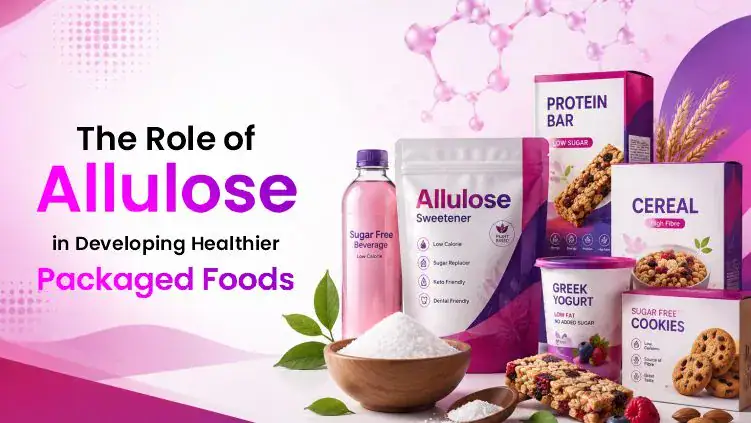
The Role of Allulose in Developing Healthier Packaged Foods
Packaged food shelves look different than they did five years ago. Shoppers now flip products over before they flip them into the cart, and the first thing many of them check is sugar content. This shift is not a passing trend. It is a permanent change in how consumers evaluate value, and it puts food manufacturers under direct pressure to reformulate faster than ever before.
Sugar reduction has moved from a marketing talking point to a core R&D mandate. Regulatory bodies across markets are tightening front-of-pack labeling rules, retailers are setting their own sugar thresholds for shelf placement, and health-conscious buyers are actively comparing products within the same category based on grams of sugar per serving. For a product development team, this means sugar reduction is no longer optional. It is a line item in every new product brief, every reformulation project, and every innovation roadmap.
This is exactly where allulose earns its place in a formulator’s toolkit. Allulose lets food manufacturers cut sugar and calories dramatically while keeping the taste, browning, mouthfeel, and shelf stability that consumers expect from a full-sugar product. Brands that use allulose correctly do not have to choose between “healthier” and “delicious.” This article breaks down what allulose is, how it works in real production environments, and how manufacturers across bakery, dairy, beverage, snack, and confectionery categories are using it to build better-for-you packaged foods without losing consumer acceptance.
What Is Allulose and Why Is It Gaining Attention in the Food Industry?
Allulose is a naturally occurring monosaccharide, sometimes called a “rare sugar” because it exists only in small amounts in nature, in foods like figs, raisins, and wheat. Commercially, allulose is produced from corn starch through enzymatic conversion, which gives food manufacturers a scalable, food-grade ingredient rather than something that has to be extracted from fruit in tiny quantities.
What makes allulose sweetener stand out is how closely its behavior mirrors regular table sugar. It dissolves the same way, browns the same way in an oven, and delivers roughly 70% of sucrose’s sweetness with almost none of the calories. A gram of allulose carries about 0.4 calories, compared to roughly 4 calories per gram of sugar. That is a 90% calorie reduction on a like-for-like sweetness contribution, which is a meaningful number for any nutrition panel.
The food industry has paid close attention to allulose for three connected reasons:
It behaves like sugar in the formula. Many sugar alternatives change the way a product bakes, sets, or feels in the mouth. Allulose does not require a formulator to relearn their process from scratch, because its physical and chemical behavior tracks closely with sucrose.
It has a near-zero glycemic impact. Allulose is absorbed by the body but is not metabolized the way sugar is, so it does not raise blood glucose or insulin levels in any meaningful way. This makes it relevant for keto-positioned products, diabetic-friendly foods, and any product claiming reduced glycemic impact.
It carries strong safety and compliance credentials. Allulose has FDA GRAS (Generally Recognized As Safe) status, and Allupure™ Allulose specifically holds FSSAI approval for the Indian market, along with Halal and Kosher certification. For a regulatory or quality assurance team, that combination removes a major point of friction when evaluating a new ingredient.
Search interest around “what is allulose sweetener” has grown steadily because both consumers and food scientists are asking the same core question: can a sweetener actually replace sugar’s function, not just its sweetness? For allulose, the answer in most applications is yes, which is precisely why manufacturers across bakery, beverage, dairy, and snack categories are testing it in active reformulation projects right now.
How Does Allulose Differ From Traditional Sugar and Other Sweeteners?
Understanding allulose starts with understanding what it is not. It is not a sugar alcohol, and it is not an artificial sweetener. It sits in its own category as a low-calorie sweetener with sugar-like functionality, and that distinction matters for both labeling and formulation.
Allulose vs. sugar. Sugar delivers sweetness and calories in a fixed ratio. Every gram of sucrose contributes roughly 4 calories and drives blood glucose upward. Allulose delivers a comparable sweetening effect at 0.4 calories per gram, with minimal blood sugar impact. For a formulator, that means a product can retain most of its sweetness profile while cutting the bulk of its sugar-derived calories.
Allulose vs. sugar alcohols (like erythritol or xylitol). Sugar alcohols often bring a cooling sensation or aftertaste that consumers notice, especially in concentrated applications like hard candy or beverages. Allulose does not carry that cooling effect. It also tends to be gentler on digestion at typical use levels, since it is absorbed differently than fermentable sugar alcohols, which can cause gastrointestinal discomfort in some consumers when used in large amounts.
Allulose vs. high-intensity sweeteners (like stevia or sucralose). High-intensity sweeteners are many times sweeter than sugar and are used in tiny fractions of a formula. Because so little is used, they do not replace sugar’s bulk, texture, or browning contribution. A product formulated only with high-intensity sweeteners often needs separate bulking agents and texture modifiers to compensate. Allulose, by contrast, replaces sugar close to a 1:1 volume basis in many applications, meaning it contributes to bulk, moisture retention, and browning in a way high-intensity sweeteners simply cannot.
Allulose vs. other natural sugar alternatives. The term “natural sugar alternative” gets applied broadly, but few ingredients in that space combine allulose’s specific mix of properties: sugar-like sweetness, heat stability, low glycemic impact, and clean-label positioning as a naturally occurring rare sugar. This is a major reason food scientists increasingly treat allulose as a distinct functional category rather than lumping it in with generic sweetener substitutes.
For manufacturers evaluating a plant-based sweetener alternative for an upcoming reformulation, this differentiation is the starting point of every technical conversation. Allulose is not a like-for-like swap in every application, but it is the closest functional match to sugar available among low-calorie ingredients on the market today.
The Role of Allulose in Developing Healthier Packaged Foods
Healthier packaged foods are not defined by a single attribute. They are judged on the full nutrition panel: calories, added sugar, glycemic load, and ingredient list transparency. Allulose plays a role across all four of these categories simultaneously, which is why it has become central to so many reformulation strategies.
Calorie reduction without a “diet food” compromise. Because allulose contributes only 0.4 calories per gram against sugar’s 4, replacing even half the sugar in a formula with allulose creates a meaningful calorie reduction on the label. Manufacturers can market a product as “reduced calorie” or “lower calorie” with a defensible, real number behind the claim, not a marginal adjustment.
Added sugar reduction for label compliance. Many markets now require or encourage “added sugar” disclosure separate from total sugar. Swapping in allulose reduces the added sugar line directly, which matters both for regulatory front-of-pack warning systems and for shopper-facing “less sugar” claims.
Lower glycemic impact for functional positioning. Products targeting diabetic-friendly, keto, or low-glycemic index consumers need an ingredient that does not spike blood glucose. Allulose fits this requirement directly, letting brands build claims around blood sugar management without relying on sugar alcohols that bring their own drawbacks.
Clean-label credibility. Because allulose occurs naturally in fruits and grains and is produced through enzymatic conversion rather than heavy chemical processing, it fits cleanly into a clean-label ingredient strategy. It reads on a label as a recognizable, naturally derived sweetener rather than a synthetic additive, which supports consumer trust at the point of purchase.
The combined effect is that allulose lets manufacturers move a product meaningfully along the “healthier” spectrum without asking consumers to accept a worse-tasting or worse-textured product in exchange. That trade-off, taste for health, has historically been the biggest obstacle to sugar reduction, and it is the exact problem allulose is built to solve.
How Food Manufacturers Use Allulose in Product Formulation
Formulating with allulose requires understanding a few practical adjustments, but it does not require reinventing a production line. Food scientists working with allulose typically approach it through a few core formulation levers.
Sweetness balancing. Since allulose delivers about 70% of sucrose’s sweetness, a straight 1:1 substitution by weight leaves a formula slightly less sweet. Formulators commonly adjust the ratio slightly upward, or blend allulose with a small amount of a high-intensity sweetener to close the sweetness gap without adding back significant calories. This blending approach is common in beverage and confectionery development, where sweetness perception needs to be precisely tuned.
Browning and Maillard reaction management. Allulose is unusually reactive in Maillard browning reactions, often producing browning at a faster rate than sucrose. In baked goods, this is a functional advantage: bakers can achieve golden crust color at lower bake temperatures or shorter bake times, which also helps retain moisture. Formulators do need to monitor bake time and temperature closely in early trials, since allulose can brown a product faster than the original sugar-based recipe would suggest.
Moisture retention and shelf life. Allulose is hygroscopic in a way that closely parallels sugar, helping baked goods retain softness and extending shelf life. This matters directly for packaged bakery products, where staling is one of the biggest quality complaints manufacturers face.
Freezing point and crystallization control. In frozen desserts and some dairy applications, allulose helps depress the freezing point similarly to sugar, supporting smooth texture and scoopability while reducing ice crystal formation. This is one of the more technically demanding areas of frozen food reformulation, and allulose performs well precisely because its molecular behavior in a frozen matrix resembles sucrose.
Solubility in cold and hot systems. Beverage formulators value allulose’s high solubility across a wide temperature range, since it dissolves cleanly without leaving residue or requiring extended mixing time, in both ambient and heated beverage systems.
Bulking function in baked and confectionery items. Beyond sweetness, sugar provides physical bulk and structure. Allulose retains much of this bulking capacity, which is why it performs better than non-bulking high-intensity sweeteners in recipes where volume and structure both matter, such as cookies, cakes, and gummies.
Manufacturers working through a reformulation project typically run trials at partial substitution levels first, commonly in the 30 to 50% sugar replacement range, before scaling toward higher replacement percentages. This staged approach lets a product development team validate taste, texture, and shelf stability at each stage rather than risking a full reformulation failure in a single trial.
Benefits of Allulose for Reducing Sugar Content While Maintaining Taste and Texture
The central promise of allulose to a food manufacturer is straightforward: sugar reduction without consumer-noticeable compromise. Breaking that promise down into specific, measurable benefits helps explain why so many R&D teams have adopted it.
Clean sweetness with no bitter or metallic aftertaste. Several sugar substitutes leave a lingering aftertaste that shows up clearly in consumer sensory panels. Allulose’s taste profile closely mimics sugar’s clean, rounded sweetness, which is one of the main reasons it performs well in blind taste tests against full-sugar controls.
Texture parity in baked goods. Because allulose contributes to browning, moisture retention, and bulk in ways comparable to sugar, baked products made with allulose retain a familiar crumb structure and mouthfeel, rather than the dry, dense texture that sometimes results from other sugar reduction strategies.
Stability under standard processing conditions. Allulose remains stable under typical food processing conditions, including baking, pasteurization, and standard hot-fill beverage processes, which means manufacturers do not need to redesign their existing thermal processes to accommodate it.
Compatibility with existing equipment. Because allulose behaves similarly to sugar in mixing, dissolving, and crystallization behavior, most manufacturers can integrate it using existing production equipment and standard operating procedures, minimizing capital investment.
Reduced formulation complexity compared to sweetener blends. Some sugar reduction strategies require combining three or four different ingredients, a bulking agent, a high-intensity sweetener, a texturizer, and a masking agent, just to approximate sugar’s function. Allulose reduces this complexity because a single ingredient covers sweetness, bulk, browning, and moisture retention simultaneously.
Consumer acceptance data. Sensory studies consistently show that products reformulated with allulose score close to full-sugar controls on taste and texture attributes, which is the single biggest factor determining whether a reformulated product succeeds or fails commercially. A healthier product that consumers reject on repeat purchase has not solved the manufacturer’s problem; it has just created a different one.
These benefits combine to answer one of the most common questions manufacturers ask: what is the best sweetener for low sugar food products where taste cannot be compromised? For a wide range of applications, allulose is the ingredient built specifically to answer that question.
Applications of Allulose Across Major Food Categories
Allulose is not a niche ingredient confined to one product type. Its functional versatility means it shows up across nearly every major packaged food category, each with its own specific formulation considerations.
Bakery Products
In bread, cakes, cookies, and muffins, allulose supports browning, moisture retention, and shelf-life extension. Because it browns faster than sucrose, bakery formulators often reduce baking temperature slightly or shorten baking time to avoid over-browning while retaining internal moisture. This makes allulose particularly valuable for reduced-sugar breads and pastries, where dryness and short shelf life are common failure points in reformulation.
Dairy Products
Yogurt, flavored milk, and cultured dairy products benefit from allulose’s clean sweetness and compatibility with fermentation processes. Allulose does not interfere with the bacterial cultures used in yogurt and cultured dairy production, allowing manufacturers to maintain probiotic activity while cutting added sugar. It also contributes to a creamy mouthfeel that some non-nutritive sweeteners fail to replicate in dairy systems.
Beverages
From ready-to-drink teas to sports nutrition drinks and flavored waters, allulose’s high solubility and clean taste profile make it a strong fit for both cold and hot beverage applications. It dissolves without crystallizing or leaving sediment, and its low viscosity contribution keeps mouthfeel light, which matters for beverage categories where a heavy or syrupy texture is a common consumer complaint with other sweeteners.
Snacks
Reduced-sugar snack bars, coated nuts, and sweetened snack mixes use allulose to maintain sweetness and browning on coated or baked surfaces while reducing overall sugar load. Its Maillard-supporting properties help snack manufacturers achieve appealing color and roasted flavor notes at lower sugar inclusion levels.
Confectionery Products
Hard candies, gummies, and chocolate confections use allulose to avoid the grittiness and crystallization issues that can occur with some sugar substitutes. Allulose supports color stability and a smooth mouthfeel in sugar-free and reduced-sugar confections, which is critical in a category where texture is often the primary purchase driver.
Nutritional Foods
Protein powders, meal replacement products, and functional nutrition bars use allulose as a clean-label, low-calorie sweetening option that supports keto, diabetic-friendly, and weight-management positioning. Its compatibility with high-protein formulations, without the aftertaste common in some high-intensity sweetener blends, makes it a preferred choice for this fast-growing category.
Ready-to-Eat Packaged Foods
Sauces, dressings, cereals, and other ready-to-eat packaged items increasingly use allulose to reduce added sugar declarations on nutrition panels while preserving flavor balance. In savory-sweet applications like sauces and dressings, allulose’s clean sweetness profile avoids disrupting the overall flavor balance the way stronger high-intensity sweeteners sometimes can.
Across every one of these categories, the underlying formulation logic is the same: allulose gives manufacturers a way to hit sugar reduction and calorie reduction targets while preserving the sensory qualities that drive repeat purchase.
How Consumer Preferences Are Driving Demand for Reduced-Sugar Products
Food manufacturers do not reformulate in a vacuum. Every ingredient decision responds to a shift in what consumers are actively asking for, and the data on sugar reduction demand is consistent across markets.
Label literacy has increased. More consumers now read nutrition panels before purchase, specifically checking added sugar and calorie counts, and comparing those numbers across competing products in the same category. This behavior has turned the nutrition panel into a competitive battlefield, not just a compliance requirement.
Health conditions are shaping purchase decisions at scale. Rising rates of diabetes and metabolic health concerns have pushed a large segment of consumers to actively seek low glycemic impact foods, not as a niche diet choice but as a mainstream shopping habit. This has expanded the addressable market for reduced-sugar and low-calorie packaged foods well beyond the traditional “diet food” consumer segment.
Keto and low-carb eating patterns remain a durable demand driver. While specific diet trends come and go, the underlying consumer interest in low-carb, low-sugar eating has remained resilient, and it continues to shape new product development briefs across bakery, snack, and beverage categories.
Clean label expectations now apply to “healthy” claims. Consumers do not just want less sugar; they want the ingredient used to replace that sugar to feel trustworthy. A long, unfamiliar chemical name on the label undercuts a “healthier” positioning even if the calorie count improves. This is precisely why clean-label ingredients matter so much in reduced-sugar reformulation, and why allulose, as a naturally occurring rare sugar, fits well into this expectation.
Parents are scrutinizing children’s food and beverage sugar content more closely. Family purchasing decisions increasingly factor in sugar content for children’s snacks, drinks, and cereals, pushing brands in this space to prioritize sugar reduction earlier in their innovation pipelines.
For food manufacturers, this consumer behavior translates into a direct commercial reality: products with lower sugar, lower calories, and a clean-label ingredient list are outperforming their traditional counterparts in categories where this comparison is visible to the shopper. Reformulating with allulose is one of the most direct ways to respond to this shift without sacrificing the product experience that built the brand’s loyal customer base in the first place.
The Importance of Clean-Label and Functional Ingredients in Modern Food Production
“Clean label” started as a marketing term but has become a genuine formulation constraint that shapes ingredient sourcing decisions across the food industry. Manufacturers now evaluate every ingredient not just on functional performance, but on how it reads to the end consumer and how well it aligns with a simplified, recognizable ingredient list.
Functional sweeteners like allulose matter in this context because they deliver on both fronts simultaneously. A functional ingredient does more than one job in a formula, allulose sweetens, browns, retains moisture, and controls freezing point, which reduces the total number of ingredients a formulator needs to hit their targets. Fewer ingredients generally means a cleaner label, lower formulation cost, and simpler supply chain management.
This matters for a few specific reasons in food formulation solutions:
Regulatory alignment. Ingredients with established safety certifications, FDA GRAS status, FSSAI approval, Halal and Kosher certification, reduce regulatory risk for manufacturers expanding into new markets or facing tightening food safety scrutiny.
Consumer trust at the shelf. A recognizable ingredient name supports purchase confidence. Shoppers increasingly research unfamiliar ingredients before buying, and an ingredient with a naturally occurring origin story is easier for a brand to explain and defend in marketing and packaging copy.
Formulation efficiency. Functional ingredients that solve multiple problems, sweetness, browning, texture, shelf life, in a single addition reduce the complexity of R&D trials and shorten time to market for new product launches.
Long-term brand positioning. As sugar reduction becomes a category-wide norm rather than a differentiator, brands that build their reformulation strategy around clean-label, functional ingredients position themselves for durability rather than a short-term marketing win that competitors quickly copy.
This is the broader context in which allulose has moved from a niche ingredient to a mainstream formulation choice. It answers the functional requirements of a sugar reduction project and the clean-label expectations of the modern consumer at the same time, which is a combination few sweetening ingredients can claim.
Product Development Considerations, Challenges, and Practical Guidance for Manufacturers
Reformulating with allulose delivers strong results, but food manufacturers should approach the process with a clear understanding of the practical variables involved.
Start with a defined sugar reduction target. Rather than aiming for a vague “less sugar” goal, successful reformulation projects define a specific percentage reduction target, commonly starting at 30-50% sugar replacement, and build trial plans around validating taste, texture, and shelf life at that level before considering higher replacement percentages.
Run sensory panels early and often. Taste and texture are the ultimate test of a reformulation’s success. Manufacturers should run internal and, where possible, external consumer sensory panels at each formulation stage rather than waiting until a final product is ready. Early detection of a texture or sweetness gap is far cheaper to fix than a late-stage failure.
Account for browning behavior in bake trials. Because allulose can brown faster than sucrose, bakery teams should run trials that specifically test bake time and temperature adjustments rather than assuming an unchanged bake profile will produce the same result as the original sugar-based recipe.
Plan for shelf-life validation. Any reformulation that changes moisture retention, water activity, or freezing behavior should go through a full shelf-life study rather than relying solely on the original product’s shelf-life data. Allulose generally performs comparably to sugar in this regard, but validation protects against unexpected issues in specific formulations.
Address common sugar reduction challenges directly. The most frequent obstacles food brands report when reducing sugar include loss of sweetness intensity, texture changes in baked and frozen products, shortened shelf life, and consumer-detectable aftertaste from substitute ingredients. Allulose directly addresses each of these challenges better than many alternative approaches, which is why it has become a default consideration in sugar reduction projects rather than a last resort.
Factor in labeling and regulatory requirements early. Manufacturers should confirm ingredient labeling requirements for allulose in their target market early in the development process, since labeling conventions and permitted claims can vary. Working with a supplier that provides full technical documentation, including a technical data sheet and safety data sheet, simplifies this step considerably.
Build in supply reliability from the start. A promising lab-scale formulation is only useful if the ingredient behind it is available at commercial volume, consistently, over time. This is where ingredient sourcing strategy becomes as important as the technical formulation work itself.
Selecting a Reliable Allulose Supplier: Quality, Consistency, and Supply Chain Considerations
Formulation success depends heavily on ingredient consistency. A sweetener that performs perfectly in a lab trial but varies in purity or functionality from batch to batch at commercial scale creates costly production problems. This makes supplier selection one of the most consequential decisions a manufacturer makes in any sugar reduction project.
When evaluating an allulose supplier, food manufacturers should look closely at several factors:
Purity and consistency. Look for suppliers who can document high purity levels, ideally in the high 90s percentage range, and who can demonstrate batch-to-batch consistency through certificates of analysis. Inconsistent purity translates directly into inconsistent sweetness, browning, and texture performance on the production line.
Certifications and regulatory compliance. A credible allulose distributor should provide clear documentation of relevant certifications, FDA GRAS status, FSSAI approval for the Indian market, Halal and Kosher compliance, and any other regional certifications relevant to the manufacturer’s target markets. This documentation should be readily available, not something a buyer has to request repeatedly.
Technical support capability. Formulation with any new ingredient benefits from technical guidance. Suppliers who offer dedicated technical support, formulation assistance, and detailed technical data sheets help manufacturers move through trial-and-error faster and avoid common formulation mistakes.
Supply chain reliability. A bulk allulose ingredient supplier needs to demonstrate the manufacturing capacity and distribution reach to support a manufacturer’s growth, not just an initial trial order. Reliable packaging options, consistent lead times, and a track record of on-time delivery matter as much as the ingredient’s technical specifications.
Shelf life and storage guidance. Understanding an ingredient’s recommended storage conditions and shelf life helps manufacturers plan inventory and avoid waste. Clear guidance here reflects a supplier’s overall quality control discipline.
Sample and testing support. A trustworthy allulose supplier should make it straightforward for manufacturers to request samples for internal testing and evaluation before committing to larger volume orders, reducing risk on the manufacturer’s side of the relationship.
Allupure™ Allulose is built to meet each of these criteria directly. As an FSSAI-approved allulose supplier in India, Allupure™ Allulose delivers a high-purity, FDA GRAS certified ingredient with Halal and Kosher compliance, backed by full technical documentation including technical data sheets and safety data sheets. The team behind Allupure™ Allulose supports food manufacturers with dedicated technical guidance through every stage of formulation, from early sample testing to full commercial-scale production, and maintains a distribution network built to serve food and beverage manufacturers reliably at scale. For manufacturers evaluating an allulose distributor for an upcoming reformulation project, this combination of documented quality, regulatory compliance, and hands-on technical support is exactly what reduces risk in a sugar reduction initiative.
How Allupure™ Allulose Supports Manufacturers Building Healthier Packaged Foods
Every technical advantage allulose offers only matters if manufacturers can access it consistently, with the documentation and support needed to formulate confidently. This is the specific role Allupure™ Allulose plays for food and beverage businesses across bakery, dairy, beverage, snack, confectionery, and nutritional food categories.
Allupure™ Allulose is produced through advanced enzymatic processing with strict quality control at every stage, delivering a high-purity ingredient with the sugar-like functionality manufacturers need for successful reformulation. It carries FSSAI approval for the Indian market alongside FDA GRAS status, Halal, and Kosher certification, giving manufacturers a documented, compliant ingredient ready to support label claims around reduced sugar, reduced calorie, and low glycemic impact.
Beyond the ingredient itself, Allupure™ Allulose supports manufacturers through:
Technical formulation assistance, helping product development teams navigate sweetness balancing, browning behavior, and shelf-life validation specific to their category.
Flexible packaging and order sizing, allowing manufacturers to move from initial sample testing through pilot-scale trials to full commercial production without switching suppliers mid-project.
Reliable supply chain infrastructure, supporting manufacturers who need consistent, on-time delivery to keep production schedules on track as demand for reduced-sugar products grows.
Comprehensive technical documentation, including technical data sheets and safety data sheets, that simplify regulatory review and quality assurance approval internally.
For a food manufacturer building a sugar reduction strategy, whether reformulating an existing bestseller or developing a new better-for-you product line from scratch, this combination of ingredient quality, regulatory compliance, and technical partnership is what separates a successful reformulation from a stalled one.
Frequently Asked Questions Food Manufacturers Ask About Allulose
Is allulose a healthy sugar alternative?
Allulose is widely regarded as a healthy sugar alternative because it delivers sugar-like sweetness at roughly 90% fewer calories, with minimal impact on blood glucose or insulin levels. It carries FDA GRAS status and, in the Indian market, FSSAI approval, giving manufacturers a documented basis for health-related product claims.
How is allulose used in food manufacturing?
Food manufacturers use allulose as a direct or partial sugar replacement in formulations, typically starting at 30-50% substitution levels. It functions as a sweetener, a browning agent, a moisture retainer, and a bulking ingredient, which lets formulators reduce the number of additional additives needed to replicate sugar’s full functional role.
What are the main benefits of allulose in packaged foods?
The core benefits include a 90% calorie reduction compared to sugar, minimal glycemic impact, clean sweetness with no bitter or metallic aftertaste, strong performance in browning and moisture retention, and compatibility with existing production equipment. These combined benefits make allulose one of the few sweeteners capable of supporting a full sugar reduction claim without a noticeable taste or texture trade-off.
Can allulose replace sugar completely in a recipe?
In many applications, allulose can replace a significant portion of sugar, and in some formulations a full replacement, though most manufacturers begin with partial substitution to validate sweetness, texture, and shelf-life performance before scaling toward higher replacement levels. The right replacement ratio depends on the specific product category, since bakery, beverage, dairy, and confectionery applications each respond differently to a full sugar swap.
Where can food manufacturers source bulk allulose for production?
Manufacturers should look for an established allulose supplier or allulose distributor with documented purity levels, relevant regulatory certifications, dedicated technical support, and a reliable supply chain capable of scaling from initial trial quantities to full commercial volumes. Allupure™ Allulose provides all of these through its FSSAI-approved supply chain built specifically for food and beverage manufacturers.
Does allulose affect shelf life or product stability?
Allulose generally supports shelf life in the same way sugar does, through moisture retention and its role in controlling water activity. Manufacturers should still run a full shelf-life validation on any reformulated product, since specific interactions with other ingredients in a formula can vary by category.
Is allulose suitable for keto and diabetic-friendly product claims?
Yes. Allulose has a near-zero glycemic index and does not meaningfully raise blood glucose or insulin levels, which makes it a common choice for keto-positioned products, diabetic-friendly foods, and low-carb nutritional products.
Conclusion: Allulose as the Foundation for Healthier Packaged Food Innovation
Sugar reduction is not a temporary industry trend. It is a structural shift in what consumers expect from packaged food, and it is reshaping product development priorities across bakery, dairy, beverage, snack, confectionery, and nutritional food categories. Allulose has earned its place at the center of this shift because it solves the core tension that has slowed sugar reduction efforts for years: how to cut sugar and calories substantially without asking consumers to accept a worse-tasting, worse-textured product.
Allulose delivers sugar-like sweetness, browning, moisture retention, and bulk, at roughly 90% fewer calories and near-zero glycemic impact, while maintaining the clean-label positioning today’s health-conscious consumers expect. Across bakery products, dairy applications, beverages, snacks, confectionery, nutritional foods, and ready-to-eat packaged items, allulose gives food manufacturers a practical, well-documented path toward healthier product formulations that consumers will actually buy again.
Success with allulose depends on choosing the right sourcing partner, one that provides consistent purity, full regulatory documentation, and genuine technical support throughout the formulation process. Allupure™ Allulose offers exactly this combination for food and beverage manufacturers building their next generation of reduced-sugar, low-calorie, and better-for-you packaged foods.
If your team is planning a sugar reduction project, developing a new low-calorie product line, or simply exploring how allulose could fit into an existing formulation, connect with the Allupure™ Allulose team to request a free sample, review technical documentation, and get direct formulation support from experienced food scientists. Explore the full range of Allupure™ Allulose applications and product options to see how a trusted allulose supplier and allulose distributor can help your business bring its next healthier packaged food product to market.