

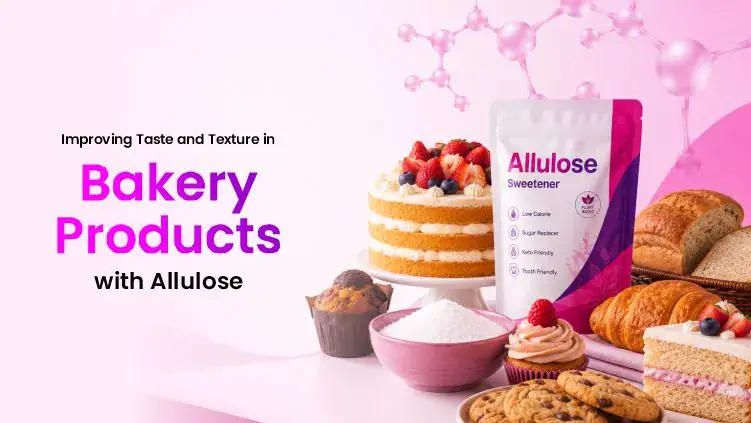
Improving Taste and Texture in Bakery Products with Allulose
Sugar reduction sounds simple on paper. Pull sugar out, add a substitute, done. Any bakery manufacturer who has tried this in a real production line knows better. The moment sugar drops, cookies turn pale and hard, cakes collapse or dry out, and muffins lose the soft crumb that keeps customers coming back. Sugar is not just a sweetener in baked goods. It is a structural ingredient, a moisture manager, and the reason a cookie browns to that familiar golden color. Remove it carelessly, and the product tells on you immediately.
This is exactly where allulose in bakery products has become one of the most talked-about solutions in food technology circles. Allupure™ Allulose gives bakery manufacturers, product developers, and food brands a practical way to cut sugar content without sacrificing the taste and texture consumers expect. This article explains why sugar reduction is so difficult in baking, how allulose solves the core formulation problems, and how your business can put this ingredient to work across cookies, cakes, muffins, bread, and pastries.
By the end, you will understand exactly how allulose sweetener for baking behaves in a formula, what results to expect in texture and browning, and how to source and scale this ingredient with confidence.
Why Reducing Sugar in Bakery Products Is So Difficult
Sugar does far more in a dough or batter than most consumers realize. Bakery manufacturers who have tried straightforward sugar cuts already know that pulling sugar out rarely gives you a lighter product. It gives you a broken one.
Sugar Is a Functional Ingredient, Not Just a Sweetener
In a bakery formulation, sugar performs several jobs at once:
1.It sweetens the product, obviously, but it also rounds out flavor and masks bitterness from cocoa, whole grains, or leavening agents.
2. It holds onto water molecules, which keeps cakes moist and cookies chewy for days after baking.
3. It interferes with gluten development, which is why sugar-rich cookies spread and stay tender instead of turning tough.
4. It participates in the Maillard reaction and caramelization, the chemical processes responsible for golden crusts, toasty aromas, and rich flavor development on the surface of baked goods.
5. It affects the freezing and setting point of batters, which changes how a cake sets during baking.
When a formulator removes sugar and replaces it with a bulking agent or an intense sweetener that lacks these functional properties, the product loses moisture faster, browns poorly, and often develops a gummy or crumbly texture depending on the recipe. This is the central challenge behind every low sugar bakery products project: sweetness is the easy part to replace. Texture and browning are the hard part.
The Taste Problem: Why Many Sugar Substitutes Fall Short
Consumers have tried enough “diet” and “sugar-free” bakery products over the years to develop strong opinions about them. Many sugar replacers leave a cooling aftertaste, a bitter finish, or an artificial sweetness that peaks too fast and fades unnaturally. This creates a trust problem. A shopper who tries one disappointing reduced-sugar cookie is unlikely to buy a second product from that brand, even if the next formulation is better.
This is why sensory performance matters as much as the nutrition label. A sugar reduction technology that delivers clean, sugar-like sweetness without a lingering aftertaste gives bakery brands a genuine competitive advantage, because it removes the compromise that shoppers have come to expect from “healthier” baked goods.
The Texture Problem: Moisture, Crumb, and Shelf Life
Texture failures typically show up in three ways when sugar is reduced without a proper functional replacement:
1.Dryness and staling. Baked goods lose moisture faster because the humectant properties of sugar are gone, so cakes and muffins dry out within a day or two.
2.Poor crumb structure. Without sugar’s tenderizing effect on gluten, cookies and cakes can turn dense, tough, or unevenly aerated.
3.Weak browning. Crusts stay pale, and the toasty flavor notes that come from browning reactions disappear, making the product taste flat even if sweetness levels are on target.
Any credible bakery ingredient solutions provider has to address all three problems together, not just the sweetness gap. This is precisely the formulation space where allulose has earned its reputation.
Why Allulose Solves What Other Substitutes Cannot
Allupure™ Allulose is a naturally derived monosaccharide made from corn starch and also found in small amounts in select fruits. Because it is a genuine sugar, not a sugar alcohol or an intense sweetener, it behaves like sucrose in a formula. It dissolves the same way, it interacts with proteins and reducing sugars in the same way, and it browns the same way, while carrying only 0.4 calories per gram and a near-zero glycemic impact. That combination of real sugar functionality with a dramatically reduced calorie and glycemic profile is what makes allulose benefits in bakery formulations so distinct from other reduced-sugar approaches. The remainder of this article breaks down exactly how that functionality translates into better sweetness, better texture, and better commercial outcomes.
What Is Allulose and Why It Behaves Like Real Sugar in Baking
Understanding allulose applications in food industry settings starts with understanding what the ingredient actually is at a molecular level, because that explains why it performs so differently from other sugar replacers on the market.
The Basics: A Rare Sugar with Sucrose-Like Behavior
Allupure™ Allulose is classified as a rare sugar, meaning it occurs naturally in only small quantities in foods like figs, raisins, and wheat. Commercially, it is produced through an enzymatic conversion process using corn starch as the source material, which allows manufacturers to supply it at the volume and consistency that bakery production requires.
What sets allulose apart from artificial sweeteners and sugar alcohols is its chemical structure. It is a genuine monosaccharide, structurally close to fructose, which means it interacts with heat, moisture, proteins, and other sugars during baking in ways that intense sweeteners and sugar alcohols simply cannot replicate. This is the reason allulose delivers approximately 70 percent of the sweetness of sucrose while contributing only 0.4 calories per gram, roughly 90 percent fewer calories than table sugar, without the bitter or artificial aftertaste that undermines so many sugar substitutes.
Zero Glycemic Impact Without Losing Sugar-Like Function
One of the most important allulose benefits in bakery applications is its metabolic profile. Allulose does not raise blood glucose or insulin levels in the way sucrose does, making it a strong fit for diabetic-friendly and keto-positioned bakery products. Yet unlike many low-glycemic alternatives, it does not require a formulator to sacrifice functionality to get there. This is a rare combination in the sweetener category: a genuinely sugar-like ingredient that also satisfies the low-glycemic, reduced-calorie demands driving so much of today’s product development.
Clean Label Positioning That Consumers Recognize
Clean label expectations have shifted dramatically over the past several years. Shoppers increasingly read ingredient panels and look for names they recognize or that sound naturally derived rather than synthetic. As a naturally occurring rare sugar, allulose fits comfortably within a clean label sweetener strategy, giving brands a sugar reduction story they can communicate honestly on packaging without relying on complex chemical names that raise consumer suspicion.
Allupure™ Allulose also carries FDA GRAS certification, along with Halal and Kosher certification, and is FSSAI-approved for use in India. For bakery manufacturers exporting or selling in regulated markets, this certification profile removes a significant amount of regulatory friction that can otherwise slow down a product launch.
Heat Stability: Why Allulose Survives the Oven
Baking is a demanding thermal environment. Oven temperatures for cookies, cakes, and bread routinely exceed 180 degrees Celsius, and many sugar substitutes degrade, lose sweetness, or develop off-flavors under this kind of heat exposure. Allulose is heat stable up to 200 degrees Celsius, which means it holds its sweetness profile and functional behavior throughout the entire baking process, from mixing through to the final minutes in the oven when browning reactions are occurring on the crust.
This heat stability is a major reason formulators trust allulose sweetener for baking applications specifically, as opposed to beverage or tabletop use cases where thermal stress is far less demanding.
Solubility and Processing Compatibility
Allulose also dissolves readily in both wet and dry mixing systems, which matters for bakery production lines that batch large volumes of batter or dough. A sweetener that does not dissolve evenly can create inconsistent sweetness distribution, gritty texture, or crystallization issues during storage. Allupure™ Allulose’s solubility profile supports smooth incorporation into creaming steps, batter mixing, and dough development without requiring specialized processing equipment, which keeps the transition to a reduced-sugar formula manageable for manufacturers already running established production lines.
How Allulose Improves Texture in Bakery Products
Texture is where most sugar reduction projects succeed or fail, and it is also where allulose demonstrates the clearest advantage over other substitutes. Improving bakery texture with allulose comes down to three connected functions: moisture retention, softness, and structural support during baking.
Moisture Retention: Keeping Baked Goods Soft Longer
Sugar’s humectant property, its ability to bind and hold water molecules, is one of the hardest functions to replace in a reduced-sugar formula. Without it, cakes dry out within a day, muffins turn crumbly, and cookies lose their chew far faster than a full-sugar version.
Because allulose shares structural similarities with fructose, it retains a meaningful portion of this water-binding capacity. In practical terms, this means:
1.Cakes stay moist for longer after baking, extending the window in which the product tastes fresh.
2.Muffins hold their tender crumb rather than turning dry and dense within 24 to 48 hours.
3.Cookies that are meant to be soft or chewy retain that texture instead of hardening prematurely.
For bakery manufacturers, this translates directly into fewer consumer complaints about dryness and staling, which is one of the most common reasons shoppers abandon a reduced-sugar product after a single purchase.
Softness and Crumb Structure
Beyond moisture, sugar also tenderizes gluten structure, which is why full-sugar cookies spread evenly and cakes achieve a light, even crumb. When sugar is removed without a functional replacement, gluten can overdevelop, leading to toughness, uneven rise, or a dense, gummy interior.
Allulose supports softer texture outcomes by interacting with the batter or dough system in a way that mirrors sucrose’s tenderizing role. Formulators working on cookies, muffins, cakes, and soft-baked bars report that allulose-based formulas hold a texture much closer to the full-sugar benchmark than formulas built around bulking agents or intense sweeteners alone, which tend to leave gaps in mouthfeel that consumers notice immediately.
Spread, Set, and Structural Behavior During Baking
Cookie spread is a particularly sensitive metric in bakery product development. Sugar melts during baking and contributes to how far a cookie spreads before it sets. Substitutes that behave differently under heat can cause cookies to spread too little, resulting in a thick, cakey texture instead of the classic flat, crisp-edged cookie many consumers expect.
Because allulose responds to heat in a sugar-like way, it supports more predictable spread and set behavior in cookie and biscuit formulations, which reduces the need for extensive recipe rework when transitioning from a full-sugar to a reduced-sugar version.
Shelf Life and Sensory Stability Over Time
Texture on day one matters, but bakery manufacturers also need texture that holds up across the product’s full shelf life, whether that is three days for a fresh bakery item or several months for a packaged shelf-stable product. Products that dry out, harden, or develop off-textures during storage generate returns, food waste, and reputational damage for a brand.
Allulose’s moisture retention properties support better sensory stability across shelf life, helping baked goods maintain their intended softness, chew, or crumb structure closer to day one performance for a longer stretch of the product’s shelf life. This is a meaningful advantage for manufacturers trying to balance sugar reduction goals with the practical demands of distribution and retail shelf time.
Practical Formulation Guidance for Texture Optimization
Bakery formulators working with allulose for the first time typically get the best results by keeping a few practical points in mind:
1.Because allulose is about 70 percent as sweet as sucrose, formulations often use a slightly higher inclusion rate or combine allulose with other approved ingredients to hit target sweetness while preserving bulk and texture contribution.
2.Moisture levels in the base recipe may need minor adjustment during initial trials, since allulose’s water interaction differs slightly from sucrose even though the overall behavior is far closer than most substitutes.
3.Mixing times and creaming steps generally do not require major changes, since allulose dissolves and incorporates in a similar manner to standard sugar.
Working through a structured trial process, ideally with technical support from an experienced allulose supplier, helps manufacturers dial in texture targets faster and avoid unnecessary trial-and-error cycles on the production floor.
How Allulose Supports Browning and Flavor Development in Baked Goods
Browning is one of the most visible signals of quality in a bakery product. A pale, flat-looking cookie or a light, uninteresting crust on a loaf of bread signals to consumers, often subconsciously, that something is missing. This is one of the toughest hurdles in sugar reduction technology, and it is also one of the areas where allulose delivers a clear, measurable advantage.
Understanding the Maillard Reaction in Baking
The Maillard reaction is the chemical process responsible for the golden-brown color and toasty, complex flavor notes that develop on the surface of baked goods during exposure to heat. It occurs when reducing sugars react with amino acids from proteins in the dough or batter. Sucrose itself is not a reducing sugar, but it breaks down during baking into glucose and fructose, both of which actively participate in Maillard browning.
Many sugar substitutes, particularly sugar alcohols and non-nutritive sweeteners, do not participate in the Maillard reaction at all. The result is baked goods that taste sweet but look and smell underdeveloped, missing the toasty, caramelized notes that consumers associate with a well-baked cookie, muffin top, or bread crust.
Why Allulose Browns Like Sugar
Allulose is a reducing sugar, which means it engages directly in Maillard browning reactions during baking, much like the glucose and fructose that sucrose breaks down into. This is a major reason allulose stands out among sugar reduction technology, because it does not just replace sweetness, it also replaces the visual and aromatic cues that signal a properly baked, appetizing product.
Allupure™ Allulose supports Maillard reaction development and sugar-like browning and caramelization in bakery applications, and it remains heat stable up to 200 degrees Celsius, allowing this browning behavior to progress reliably throughout standard baking times and temperatures used for cookies, cakes, muffins, bread, and buns.
The Flavor Connection Between Browning and Perceived Sweetness
Browning is not purely cosmetic. The toasty, caramelized compounds generated by the Maillard reaction contribute directly to flavor complexity, and they also influence how sweet a product tastes even before the sweetener itself registers on the palate. A well-browned cookie or muffin top often tastes richer and more satisfying than a pale one with identical sugar content, simply because of the aroma and flavor compounds generated during baking.
This is why allulose’s browning performance matters just as much as its sweetness profile when it comes to overall consumer acceptance. A reduced-sugar product that browns properly delivers a more complete sensory experience, which supports higher repeat purchase rates and stronger brand trust over time.
Practical Application Across Bakery Categories
Browning behavior varies by product category, and formulators should account for these differences when working with allulose:
1.Cookies and biscuits rely heavily on surface browning for visual appeal and flavor. Allulose supports the golden, slightly caramelized edges that define a well-baked cookie.
2.Muffins and cakes depend on a browned top and, in some cases, a browned crust along the sides of the pan. Allulose’s Maillard activity helps maintain that visual signal of freshness and quality.
3.Bread and buns need consistent crust color for both aesthetic and flavor reasons, particularly in artisan-style or premium bakery positioning. Allulose’s heat-stable, reducing-sugar behavior supports crust development comparable to standard formulations.
Manufacturers moving from a full-sugar to a reduced-sugar recipe should run side-by-side baking trials at standard oven temperatures and times to confirm browning performance meets their existing quality benchmarks before scaling to full production.
Formulation Strategies for Using Allulose Across Bakery Product Categories
Every bakery category, cookies, cakes, muffins, bread, and pastries, presents its own formulation considerations. Understanding these nuances helps product developers move from a lab-scale trial to a commercially viable, low sugar bakery product faster.
Cookies and Biscuits
Cookies depend heavily on sugar for spread, crispness or chew depending on the style, and surface browning. When formulating with allulose sweetener for baking in a cookie system:
1.Expect spread behavior that is closer to a full-sugar formula than what is typical with bulking agents or sugar alcohols, since allulose responds to heat in a sugar-like manner.
2.Monitor bake time closely during initial trials, since browning develops actively and formulators may find they can slightly reduce bake time while still achieving the desired color.
3.For soft or chewy cookie styles, allulose’s moisture retention properties help maintain chew over multiple days of shelf life, which is a common weak point in reduced-sugar cookie formulas.
Cakes and Cupcakes
Cakes are especially sensitive to changes in moisture and structure because the crumb needs to stay light while still holding enough moisture to avoid dryness.
1.Batter viscosity may shift slightly when reformulating with allulose, so a short trial run to adjust liquid ratios is often worthwhile before committing to a final recipe.
2.Because allulose supports moisture retention, cakes formulated with it tend to resist the rapid drying out that is common in reduced-sugar cake products, which is one of the most frequent consumer complaints about “diet” cake products.
3.Browning on cake tops and any exposed crust benefits from allulose’s Maillard activity, helping maintain the golden appearance consumers expect from a fresh-baked cake.
Muffins
Muffins sit between cakes and quick breads in terms of structure, and they are particularly vulnerable to going dry and crumbly when sugar is reduced without a functional replacement.
1.Allulose’s humectant behavior directly addresses the dryness issue that plagues many reduced-sugar muffin formulas, helping maintain a moist, tender crumb for several days past baking.
2.Muffin tops, which rely on browning for visual appeal on the shelf or in a bakery case, benefit from allulose’s reducing-sugar activity during baking.
Bread and Buns
Bread formulation introduces an additional variable: yeast fermentation. Sugar in bread dough is not just a sweetener, it also serves as a food source for yeast during proofing.
– Formulators should evaluate fermentation performance carefully when substituting allulose for a portion of the sugar in a yeasted dough, since allulose is not metabolized by yeast in the same way sucrose or glucose typically are, and adjustments to proofing time or a partial retention of fermentable sugars may be needed depending on the recipe.
– Crust color and browning, a key quality marker in bread and buns, is well supported by allulose’s Maillard reaction activity, helping maintain the appetizing crust color consumers associate with fresh-baked bread.
– Soft bun and brioche-style products benefit from allulose’s moisture retention properties, supporting the tender, soft texture these products are known for even at reduced sugar levels.
Pastries and Laminated Dough Products
Pastries, particularly laminated dough products like croissants and Danish pastries, depend on precise fat and moisture balance to achieve flaky layers alongside a well-browned exterior.
– Allulose’s heat stability supports consistent browning on the exterior surface of laminated pastries without compromising the internal layering structure, provided the overall fat and hydration balance of the dough is maintained.
– Sweetness contribution from allulose in fillings or glazes performs in a sugar-like way, supporting flavor consistency across the finished pastry.
A General Formulation Framework
Across all these categories, a practical approach to reformulating with allulose typically follows this sequence:
1.Establish a clear sweetness target relative to the full-sugar benchmark, keeping in mind allulose’s approximately 70 percent relative sweetness to sucrose.
2.Run a baseline trial replacing a portion of sugar with allulose while holding other ingredients constant, then assess texture, browning, and moisture at standard and extended shelf-life intervals.
3.Adjust liquid content, mixing time, or bake time incrementally based on trial results rather than making multiple changes simultaneously, which makes it easier to isolate what is driving any texture or browning shifts.
4.Conduct sensory panels comparing the reformulated product against the original to confirm consumer acceptance before finalizing the recipe for production scale-up.
Manufacturers who follow a structured trial process like this typically reach a commercially ready, low sugar bakery products formula in fewer iterations than teams that attempt a full sugar swap without a phased approach.
Consumer Demand and the Commercial Case for Low Sugar Bakery Products
Formulation science only matters if there is a market ready to buy the finished product. Fortunately, consumer demand for reduced-sugar bakery products has been building steadily, driven by a combination of health awareness, dietary trends, and label-reading habits that are now standard practice for a large share of shoppers.
Why Consumers Are Actively Seeking Reduced-Sugar Options
Several overlapping trends are driving demand for lower-sugar bakery products:
Health-conscious purchasing habits. More consumers are actively managing sugar intake, whether for general wellness, weight management, or specific health goals, and they are checking nutrition panels before buying packaged bakery items.
Diabetic and keto-friendly diets. Shoppers managing blood glucose levels or following low-carbohydrate eating patterns specifically look for bakery products formulated with low-glycemic sweeteners rather than standard sugar.
Clean label expectations. Consumers increasingly favor products with ingredient lists that feel recognizable and naturally derived, which supports demand for a natural sweetener for bakery formulations over synthetic alternatives.
Willingness to pay a premium. Shoppers who prioritize reduced-sugar or better-for-you products often show a stronger willingness to pay a modest premium for a product that delivers on both health positioning and taste, provided the sensory experience holds up.
The Trust Gap Bakery Brands Must Close
Despite strong demand, many consumers remain skeptical of reduced-sugar bakery products because of past disappointing experiences with dry, bland, or artificial-tasting alternatives. This skepticism represents both a challenge and an opportunity. Brands that can consistently deliver a reduced-sugar product with genuine taste and texture parity to the full-sugar version stand to capture a loyal customer base that has been burned by inferior products in the past.
This is where allulose’s sugar-like sensory performance becomes a commercial differentiator rather than just a technical one. A brand that can genuinely say its reduced-sugar cookie tastes and feels like the original, without an asterisk, earns a level of consumer trust that translates directly into repeat purchases and stronger brand loyalty.
Product Development Considerations for Market Success
Bakery manufacturers and food brands evaluating a sugar reduction project should weigh several factors before committing resources:
1.Target sugar reduction percentage. A partial reduction, for example 30 to 50 percent, is often easier to achieve with strong sensory results than an attempt at a full 100 percent sugar replacement, particularly for a first product launch.
2.Packaging and labeling strategy. Clear, honest communication about sugar content and the use of a clean label sweetener like allulose helps build consumer trust rather than relying on vague “healthier” claims.
3.Category positioning. Products aimed at diabetic-friendly, keto, or general wellness segments may justify a stronger reformulation investment given the dedicated consumer base actively seeking these options.
4.Shelf-life and distribution requirements. Products intended for longer shelf life or wider distribution need extra attention to moisture retention and texture stability over time, both of which are supported by allulose’s functional profile.
Commercial Opportunities Across the Bakery Sector
The commercial opportunity extends across several distinct segments:
1.Packaged bakery brands can use allulose to launch or reformulate cookies, cakes, and snack bars targeting the growing reduced-sugar snacking segment.
2.Artisan and retail bakeries can differentiate their offerings by introducing reduced-sugar versions of popular items without the quality compromise associated with older-generation sugar substitutes.
3.Private label and contract manufacturers can offer allulose-based reformulation services to retail partners looking to expand their better-for-you bakery assortments.
4.Foodservice and quick-service bakery operators can use allulose to develop menu items that appeal to health-conscious customers without requiring a separate, lower-quality “diet” menu category.
Across all of these segments, the underlying commercial logic is the same: consumers want the reduced-sugar option to taste and feel like the product they already love, and allulose is one of the few ingredients capable of delivering that outcome consistently.
Sourcing Allulose: What Bakery Manufacturers Should Know
Formulation success depends on consistent, high-quality ingredient supply. For bakery manufacturers ready to move from trial to full production, sourcing decisions matter just as much as the formulation work itself.
Why Ingredient Quality and Consistency Matter at Scale
A bakery production line running thousands of units per shift cannot afford batch-to-batch variation in sweetener performance. Inconsistent purity, moisture content, or particle size in a sweetener ingredient can lead to unpredictable texture, sweetness, or browning results, undermining months of careful formulation work. This is why working with an established allulose supplier that maintains strict quality control and consistent manufacturing standards is essential for any bakery brand serious about scaling a reduced-sugar product line.
Allupure™ Allulose is produced with 99.5 percent purity during sourcing and refined further to 99.9 percent purity at the technical specification level, using advanced enzymatic processing methods and quality-controlled manufacturing facilities that operate around the clock to ensure consistent batch performance. This level of purity and process control gives bakery manufacturers the confidence that every batch will perform the same way in their formulations, batch after batch, production run after production run.
Certifications That Matter for Regulatory Compliance
Bakery manufacturers selling into regulated markets need documentation to back up ingredient claims. Allupure™ Allulose carries FSSAI approval for the Indian market, along with FDA GRAS certification, and Halal and Kosher certification, giving manufacturers the regulatory documentation needed to support product claims and pass audits from retail partners or export markets.
Working with an Allulose Distributor for Bulk and Ongoing Supply
For manufacturers moving beyond small-batch trials into full commercial production, working with a reliable allulose distributor becomes central to maintaining uninterrupted supply. A distribution partner with flexible packaging options and dependable delivery timelines allows bakery brands to scale sugar reduction projects without the supply chain disruptions that can stall a product launch or damage a retail relationship. Allupure™ Allulose is supported by a distribution network reaching more than 50 countries, giving manufacturers confidence in long-term supply reliability whether they are running a single production facility or scaling across multiple regions.
Technical Support Throughout the Formulation Process
Sourcing the right ingredient is only part of the equation. Formulation support matters just as much, particularly for manufacturers new to working with allulose. A supplier offering dedicated technical assistance, including guidance on inclusion rates, moisture adjustments, and category-specific formulation strategies, helps bakery manufacturers move through the trial-and-error phase faster and with fewer wasted production runs. Allupure™ Allulose is backed by a technical support team and formulation assistance designed specifically to help partners create successful reduced-sugar products, rather than leaving manufacturers to work through complex reformulation challenges alone.
Packaging Options for Different Production Scales
Bakery manufacturers vary widely in production volume, from small artisan bakeries to large-scale industrial facilities, and ingredient sourcing should match that scale. Flexible packaging options, ranging from smaller trial quantities to full bulk bag formats, allow manufacturers to move from initial product development through pilot runs and into full commercial production without switching suppliers or renegotiating terms at each stage of growth.
Documentation and Due Diligence Before Committing to a Supplier
Before finalizing a sourcing decision, bakery manufacturers should request and review:
– Technical data sheets confirming purity, specification, and functional performance parameters.
– Safety data sheets and certificates of analysis for each production batch.
– Documentation of relevant certifications, including GRAS status, Halal, Kosher, and any regional regulatory approvals relevant to target markets.
– Sample availability for internal testing prior to committing to a larger purchase agreement.
Manufacturers who complete this due diligence process upfront typically experience a smoother transition from lab-scale trials to full commercial production, with fewer surprises during scale-up.
Improving Bakery Texture with Allulose: A Summary of Best Practices
Bringing together the formulation science and commercial considerations discussed throughout this article, a few core best practices consistently separate successful allulose-based bakery products from disappointing ones.
Start with a Clear Sensory Benchmark
Before reformulating, establish a clear sensory profile of the existing full-sugar product, covering sweetness intensity, moisture level, crumb texture, and browning color. This benchmark becomes the target for the reformulated version and gives product development teams an objective standard to measure against rather than relying on subjective impressions alone.
Adjust Inclusion Rates Based on Relative Sweetness
Since allulose delivers roughly 70 percent of the sweetness of sucrose, formulators typically need a slightly higher inclusion rate to hit the same sweetness target, or they combine allulose with other approved ingredients to balance sweetness while managing overall bulk and calorie contribution. Getting this ratio right early avoids repeated rounds of sensory testing later in development.
Account for Moisture and Bake Time Adjustments
Because allulose’s interaction with water and heat differs slightly from sucrose, even though overall behavior is far closer than most alternatives, initial trials should include small adjustments to liquid content and bake time to dial in the exact texture and browning result the team is targeting.
Test Across the Full Shelf Life, Not Just Day One
A product that tastes and feels right on the day it is baked can still fail if it dries out or loses texture within a few days. Testing sensory quality across the intended shelf life window, not just immediately after baking, is essential for catching texture or moisture issues before a product reaches retail shelves.
Validate with Real Consumer Sensory Panels
Internal taste tests are useful, but validating a reformulated product with representative consumer sensory panels provides a more reliable signal of market acceptance before committing to full-scale production and packaging investment.
Partner with a Supplier That Understands Bakery Applications Specifically
Not every sweetener supplier has deep, hands-on experience with bakery-specific formulation challenges like browning, gluten interaction, and moisture retention. Working with a partner like Allupure™ Allulose, backed by dedicated technical support and formulation guidance tailored to bakery applications, helps manufacturers avoid common pitfalls and reach a market-ready product faster.
Frequently Asked Questions About Allulose in Bakery Products
What is allulose used for in baking?
Allulose is used in baking as a low-calorie, low-glycemic sweetener that replaces some or all of the sugar in cookies, cakes, muffins, bread, and pastries. Because it behaves like real sugar during baking, it also supports moisture retention, texture, and browning, functions that many other sugar substitutes cannot provide.
How does allulose improve bakery texture?
Allulose improves bakery texture by retaining moisture in the finished product, supporting a soft and tender crumb, and behaving like sucrose during baking in terms of spread and set. This helps prevent the dryness, toughness, and crumbliness commonly associated with reduced-sugar baked goods.
Can allulose replace sugar in baking?
Yes, allulose can replace some or all of the sugar in most bakery formulations. Because it provides about 70 percent of the sweetness of sucrose, formulators often adjust inclusion rates slightly or combine it with other approved ingredients to match the target sweetness while preserving texture and structure.
What are the benefits of allulose sweetener in baked goods?
The main benefits include roughly 90 percent fewer calories than sugar, a near-zero glycemic impact, sugar-like taste without a bitter or artificial aftertaste, heat stability up to 200 degrees Celsius, and support for natural browning through the Maillard reaction, all of which help maintain the taste and appearance consumers expect from full-sugar baked goods.
What is the best sweetener for low sugar bakery products?
Allulose is considered one of the strongest options for low sugar bakery products because it combines genuine sugar-like functionality, including moisture retention and browning support, with a significantly reduced calorie and glycemic profile, addressing both the sweetness and the texture challenges that other substitutes often fail to solve.
How does allulose affect cakes and cookies specifically?
In cakes, allulose helps maintain moisture and a light crumb structure, reducing the dryness commonly seen in reduced-sugar cake formulas. In cookies, it supports appropriate spread during baking and encourages the golden-brown color associated with a properly baked cookie, while helping retain chew in soft-style cookies over several days of shelf life.
How is allulose different from sugar in bakery applications?
Allulose provides about 70 percent of the sweetness of sugar with approximately 90 percent fewer calories and a near-zero glycemic impact, while still participating in browning reactions and moisture retention in a manner similar to sucrose. Standard sugar, by contrast, is high in calories and raises blood glucose levels significantly.
Where can food manufacturers source allulose for commercial baking?
Food manufacturers can source FSSAI-approved, food-grade allulose through an established allulose supplier such as Allupure™ Allulose, which offers technical documentation, formulation support, and flexible packaging options suited to both pilot-scale trials and full commercial production.
Is allulose suitable for keto or diabetic-friendly bakery products?
Yes, allulose has a near-zero glycemic index and does not significantly raise blood glucose or insulin levels, making it a suitable ingredient for keto-friendly and diabetic-friendly bakery product formulations.
Can bakery brands buy allulose in bulk for commercial production?
Yes, allulose is available in bulk quantities through an allulose distributor offering flexible packaging sizes, allowing bakery manufacturers to scale from initial trial batches to full commercial production volumes without switching ingredient partners.
Conclusion: Allulose as the Practical Answer to Taste and Texture Challenges in Sugar Reduction
Reducing sugar in bakery products has always come with a difficult tradeoff: cut sugar, and you typically compromise on sweetness, moisture, softness, or browning, often all four at once. Allupure™ Allulose changes that equation. As a genuinely functional, naturally derived rare sugar, it delivers sugar-like sweetness, supports moisture retention for softer texture over a longer shelf life, and actively participates in the Maillard reaction to preserve the browning and flavor complexity consumers expect from a well-baked product.
For bakery manufacturers, product developers, and food brands, this means sugar reduction goals no longer have to come at the expense of consumer satisfaction. Whether the goal is a diabetic-friendly cookie line, a reduced-calorie cake product, or a broader clean label repositioning across an entire bakery portfolio, allulose in bakery products offers a formulation path that keeps taste and texture intact while meeting the calorie and glycemic targets that today’s health-conscious consumers are actively looking for.
The businesses that succeed in this category will be the ones that treat sugar reduction as a genuine formulation discipline, not a simple ingredient swap, and that partner with a supplier capable of supporting that discipline from initial trial through full commercial scale.
Ready to Formulate with Allupure™ Allulose?
If your team is ready to move forward with a reduced-sugar bakery product that does not compromise on taste or texture, Allupure™ Allulose offers the technical support, product documentation, and supply reliability to take your formulation from concept to shelf. Request a free sample, download the technical data sheet, or speak directly with our formulation team to discuss your specific bakery application. Visit Allupure™ Allulose to get started today.